


If you’ve spent any time browsing comics online in the last few years, you’ve probably noticed the same term popping up everywhere: manhwa webtoon. It’s not a trend that’s fading either. What started as a niche Korean comic format has turned into one of the biggest entertainment exports of the decade, pulling in readers who never thought they’d care about comics at all.
So what exactly is a manhwa webtoon, why has it taken over phone screens worldwide, and where should you actually start reading? Let’s get into it.
What Is a Manhwa Webtoon?
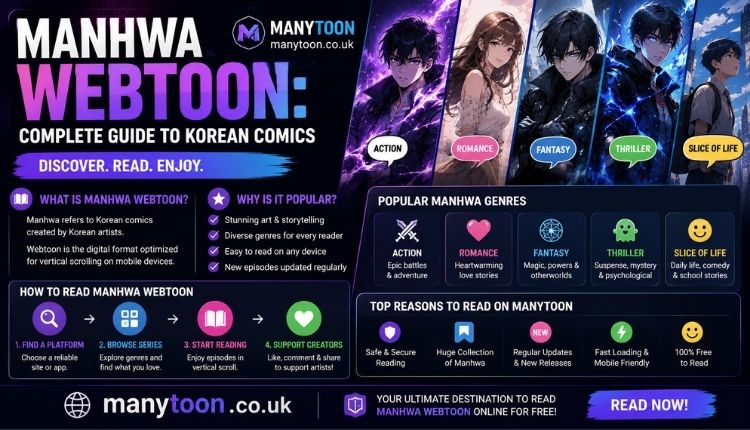
“Manhwa” is simply the Korean word for comics, the same way “manga” refers to Japanese comics and “manhua” refers to Chinese ones. A “webtoon” is the digital delivery format built specifically for phones: long vertical strips you scroll through instead of flipping pages left to right.
Put the two together and you get manhwa webtoon, Korean comics designed from the ground up for scrolling rather than page-turning. There’s no gutter to worry about, no page-flip pacing, just one continuous strip that a creator can stretch, pause, or speed up however the story needs, visit more.
This format wasn’t an accident. Korean publishers built it in the early 2000s partly because print comics were struggling against piracy and partly because everyone in Seoul was already reading on a phone during their subway commute. The format survived because it fit how people actually consume content now.
Manhwa, Manga, and Webtoon: How They Actually Differ
People throw these three words around interchangeably, and that causes real confusion. Here’s a straightforward breakdown.
| Term | What It Means | Reading Direction | Typical Color | Origin |
| Manga | Comics from Japan | Right to left, page-based | Black and white | Japan |
| Manhwa | Comics from Korea | Left to right or vertical scroll | Often full color | South Korea |
| Manhua | Comics from China | Left to right, page-based | Varies | China |
| Webtoon | A digital vertical-scroll format | Top to bottom scroll | Usually full color | South Korea (platform-driven) |
| Manhwa Webtoon | Korean comics published in scroll format | Top to bottom scroll | Full color | South Korea |
If you want the deeper breakdown, including genre-by-genre differences between manhwa and manga, our manhwa manga comparison guide covers it in more detail than a single table can.
Why Manhwa Webtoons Blew Up
A few things came together at once, and none of them were luck.
The full-color art is genuinely striking: Most manga stays black and white to keep printing costs down, since it’s still a physical medium in Japan. Manhwa webtoons never had that constraint. They were digital from day one, so artists lean into saturated color palettes, dramatic lighting, and painterly panels that look more like concept art than a comic strip.
The scroll format removes friction: You don’t need to learn a reading direction or figure out panel order. You just scroll. That sounds trivial until you watch someone who’s never read a comic in their life pick up a webtoon and finish three chapters without a single moment of confusion.
Platforms made it free and easy: Webtoon apps built their entire business model around free chapters with an ad-supported or pay-to-unlock system for early access. That’s a much lower barrier than buying a manga volume, and it’s the same freemium logic that made mobile gaming explode a decade earlier, visit more.
Adaptations kept the momentum going: Shows like Solo Leveling, Lookism, and True Beauty jumped from webtoon to anime or live-action, and each adaptation sent a fresh wave of readers back to the source material.
Popular Genres in Manhwa Webtoons
Manhwa webtoons cover almost every genre you’d expect from any comics scene, but a handful dominate the charts:
- Regression and reincarnation fantasy – protagonists get a second chance at life with knowledge from their first attempt (Solo Leveling, The Beginning After the End)
- Romance and romantic comedy – often built around workplace or school settings with slow-burn tension
- Action and martial arts – frequently tied to hunter, guild, or tournament-style power systems
- Slice of life and drama – grounded stories about family, career pressure, or personal growth
- Horror and thriller – shorter arcs that lean into the vertical format for jump scares and pacing tricks
If crossover content interests you, our guide to cartoon comics and where to read them is worth a look too, since a lot of readers move between webtoons and Western-style cartoon comics once they’ve got the reading habit.
How to Start Reading Manhwa Webtoons
New readers usually make the same mistake: they pick a title at random and bounce off it because it’s not their genre. A better approach is to pick based on mood first, then title.
- Decide on a mood: Want tension and power fantasy? Go action-fantasy. Want something lighter? Try romance or slice of life.
- Start with a completed or long-running series: Ongoing titles with hundreds of chapters usually got there because they’re consistently good.
- Read the first ten chapters before judging: Webtoons often take a few chapters to find their rhythm, especially with world-building-heavy fantasy titles.
- Check chapter release schedules: Some series update weekly, others irregularly. Knowing this upfront saves frustration later.
For a curated list of where to actually read these titles safely and legally, check our roundup of the best manhwa sites, which covers platforms by library size, update speed, and translation quality.
Manhwa Webtoon vs Raw Manga: Which Should You Read?
Some readers, especially those learning Korean or Japanese, gravitate toward raw, untranslated versions instead of official releases. It’s a different experience with a different purpose. Raw content skips the wait for translations but demands language skill you may not have yet.
If you’re curious about that side of things, including where raw content comes from and what to watch out for, our breakdown of raw manga explains the sourcing and reading tips in plain terms. Manhwa webtoons rarely need this workaround since official translations tend to keep pace with new chapters far better than traditional manga does.
Tips for New Readers
A few things that make the transition into manhwa webtoons smoother:
- Read on a phone, not a desktop: The format was built for vertical scrolling on a small screen. Desktop reading feels clunky by comparison.
- Bookmark your place manually if the app doesn’t sync well: Some platforms lose your progress across devices.
- Don’t binge everything in one sitting: Long fantasy series especially benefit from pacing yourself, since plot threads can get dense.
- Follow official platforms when you can: Creators and translators get paid through legitimate readership, and official releases tend to have better translation quality anyway.
FAQs About Manhwa Webtoons
Is manhwa the same as webtoon?
Not exactly. Manhwa refers to Korean comics as a whole, while webtoon refers to the vertical-scroll digital format. Most manhwa published today happens to be in webtoon format, which is why the terms get mixed up so often.
Are manhwa webtoons free to read?
Many platforms offer free chapters with a delayed or ad-supported release schedule, and let readers pay to unlock new chapters early. Older chapters usually become free over time.
What’s the difference between manhwa and manga?
Manga comes from Japan and is typically black and white with right-to-left reading order. Manhwa comes from Korea, is usually full color, and is often formatted for vertical scrolling rather than traditional pages.
Do all manhwa webtoons get anime adaptations?
No. Only a small percentage get adapted into anime or live-action, usually the ones with strong readership numbers and broad genre appeal, like Solo Leveling or Tower of God.
Can beginners understand manhwa webtoons without reading manga first?
Yes. The vertical scroll format is actually easier for newcomers than traditional manga’s page-and-panel layout, since there’s no reading direction to learn.
How often do manhwa webtoon chapters release?
It varies by title and platform. Weekly updates are the most common schedule, though some long-running series post biweekly or on irregular timelines depending on the creative team’s workload.
Conclusion
Manhwa webtoon isn’t just a buzzword stapled onto Korean comics; it’s a genuinely different way of telling visual stories, built for how people actually read on their phones today. The full-color art, the scroll-based pacing, and the low barrier to entry explain why so many readers who never touched a comic book are now several hundred chapters deep into a fantasy series they can’t put down.
If you’re new to the format, start with a genre you already like in other media, give a series ten chapters before judging it, and read through official platforms so the creators actually get paid for the work. Once you get past the first series, you’ll understand exactly why this format took over.
