

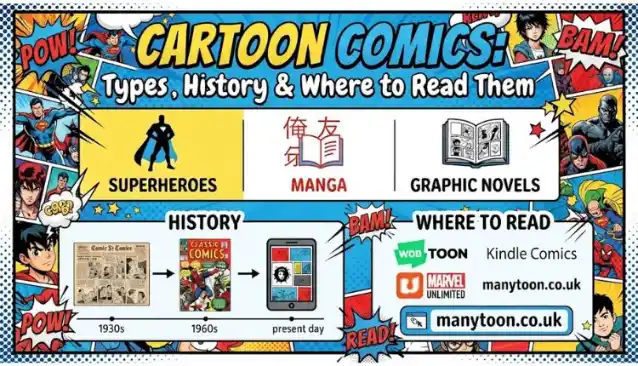
Cartoon comics is an umbrella term that covers newspaper strips like Garfield, superhero comic books and webtoons scrolling down a phone screen. This guide walks through what cartoon comics covers, the main types, and where to read them.
What Are Cartoon Comics, Exactly?
At their core, cartoon comics combine two things: cartooning (simplified, often exaggerated drawing) and sequential storytelling (a series of panels or frames that move a story forward). A single funny drawing is a cartoon. String several of them together with dialogue and a plot, and you’ve got a comic.
The term gets used loosely, which causes most of the confusion. In the US, “cartoon comics” often refers to comic strips and comic books built around cartoon-style art rather than realistic illustration. In other parts of the world, the same phrase gets applied to manga, manhwa, and webtoons, since all of them rely on stylised, cartoon-like character design.
A Short History of Cartoon Comics
Cartoon comics didn’t appear overnight. They grew out of political caricature and satirical drawing in 18th and 19th century newspapers, long before anyone used the word “comic” the way we do now.
By the early 1900s, newspaper comic strips like The Yellow Kid and Little Nemo had turned cartooning into a daily habit for millions of readers. The 1930s brought the comic book boom, with Superman and Batman kicking off what’s now called the Golden Age. Japan built its own parallel tradition with manga, which exploded after World War II thanks to artists like Osamu Tezuka. Korea followed with manhwa, and in the 2000s, smartphones gave rise to webtoons: vertical-scroll comics designed to be read with a thumb instead of a page turn.
Every one of these branches still counts as cartoon comics. They just took different paths to get there.
Types of Cartoon Comics
Here’s a quick breakdown of the main formats you’ll come across, and how they differ.
| Format | Origin | Reading Direction | Typical Length | Best Known For |
| Comic Strip | United States, 19th century | Left to right | 3-4 panels | Newspaper humour, daily gags |
| Comic Book | United States, 1930s | Left to right | 20-32 pages per issue | Superheroes, ongoing series |
| Manga | Japan | Right to left | 150-200 pages per volume | Wide genre range, black-and-white art |
| Manhwa | South Korea | Left to right | Varies by platform | Fantasy, romance, action |
| Webtoon | South Korea, digital-native | Vertical scroll | Episodic, mobile-first | Full-colour art, phone-friendly layout |
| Graphic Novel | Global | Left to right | Book-length, standalone | Literary storytelling, standalone plots |
Manhwa deserves a closer look here, since it’s often confused with manga despite being a separate tradition with its own visual style and pacing. If you want the full picture, this breakdown of manhwa as a platform for enthusiasts covers what sets it apart.
Why Cartoon Comics Have Stuck Around
 A few things keep this format relevant decade after decade.
They’re fast to read but hard to put down: A comic panel delivers a joke, a plot beat, or an emotional gut-punch in seconds. That pacing is part of why comics translate so well to phones.
The art style does a lot of heavy lifting: Cartoon comics don’t need photorealism to land an emotion. A few exaggerated lines can convey rage, heartbreak, or comedy faster than a paragraph of prose could.
They travel across cultures easily: A strip drawn in Seoul can be read in Sao Paulo the same afternoon it’s published, especially now that webtoons and manhwa are distributed digitally from day one.
Genres cover everything. Romance, horror, sports, slice-of-life, crime, fantasy. If a genre exists in prose fiction, there’s a cartoon comic version of it too.
Where to Read Cartoon Comics Online
Digital platforms have made cartoon comics far easier to access than the days of hunting through comic shops or waiting for a translated volume to hit shelves. If you’re new to the format, it helps to start with a general overview before diving into a specific style, Visit more.
This overview of how webtoon platforms work is a good starting point if you’ve never used one before. It covers browsing, bookmarking series, and following ongoing releases.
For readers who want to go further and explore untranslated or original-language editions, this guide on manhwa raw explains what that term actually means and what to expect from it.
And if you’re curious about who’s behind these guides, the Manytoon about page has more background on the site itself.
How to Get Started With Cartoon Comics
If all of this is new to you, don’t try to read everything at once. Pick one format, finish a short series, and see if it clicks.
- Start with a comic strip or short webtoon: Low commitment, quick to finish, easy to tell if the style suits you.
- Pick a genre you already like in other media: If you enjoy mystery novels, look for a comic in that genre first.
- Try one manhwa and one manga: The reading direction and pacing differ enough that it’s worth comparing them directly.
- Follow ongoing series in small doses: Weekly or biweekly releases are easier to keep up with than binge-reading a finished archive.
- Join a community or comment section: Half the fun of cartoon comics, especially webtoons, is discussing plot twists with other readers in real time.
For general background, see the Wikipedia overview of comics.
FAQs About Cartoon Comics
Is there a difference between “cartoons” and “cartoon comics”?
Yes. A cartoon is usually a single image or an animated short. Cartoon comics are sequential, multiple panels or frames that build a story, told in the same simplified art style.
Are manga and manhwa considered cartoon comics?
Broadly, yes. Both use cartoon-style art and sequential panels, even though they come from different countries and follow different visual conventions.
What’s the difference between a webtoon and a regular comic?
Webtoons are built for vertical scrolling on a phone, usually in full colour, and released episode by episode. Traditional comics are paginated and read left to right (or right to left, for manga).
Are cartoon comics only for kids?
No. While plenty of cartoon comics are aimed at younger readers, just as many deal with mature themes, complex plots, and adult humour. The art style doesn’t dictate the audience.
Where’s the best place to start reading cartoon comics online?
Start with a platform overview so you understand how browsing and updates work, then pick one format (webtoon, manhwa, or manga) and try a short series before committing to a longer one.
Conclusion
Cartoon comics aren’t one thing. They’re a whole family of storytelling formats that share a common ancestor: simple, expressive art paired with sequential panels. Whether you grew up on newspaper strips, discovered manga in your teens, or found webtoons through a friend’s phone screen, you’re part of the same tradition that’s been evolving for over a century.
The best way to understand cartoon comics isn’t to read about them, it’s to start reading them. Pick a format from the table above, follow one of the guides linked in this article, and see which style of storytelling pulls you in.
