

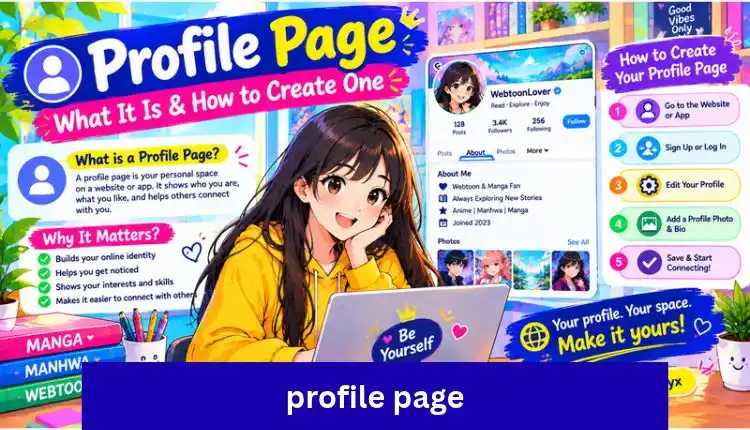
A profile page is often the first thing a stranger sees before they decide whether to trust you, follow you, hire you, or click away. Whether it’s on Instagram, LinkedIn, a dating app, or a company website, that one page carries more weight than most people give it credit for.
This guide breaks down what a profile page really is, why it matters more than people assume, and how to build one that gets you noticed for the right reasons.
What Is a Profile Page?
A profile page is a dedicated section of a website or app that summarises who you are (or who your brand is) in one place. It usually combines a photo, a short bio, contact or social links, and sometimes activity history like posts, reviews, or portfolio items.
You’ll find profile pages almost everywhere online:
- Social platforms like Instagram, TikTok, and LinkedIn
- Marketplaces such as Etsy, Fiverr, and Amazon seller pages
- Community forums and comment sections
- SaaS dashboards, where a profile page holds your account settings and public-facing info
- Dating apps, where the profile page is essentially the entire product
The format changes from platform to platform, but the job stays the same: give visitors enough context, fast, to decide what to do next.
Why a Profile Page Matters More Than You’d Think
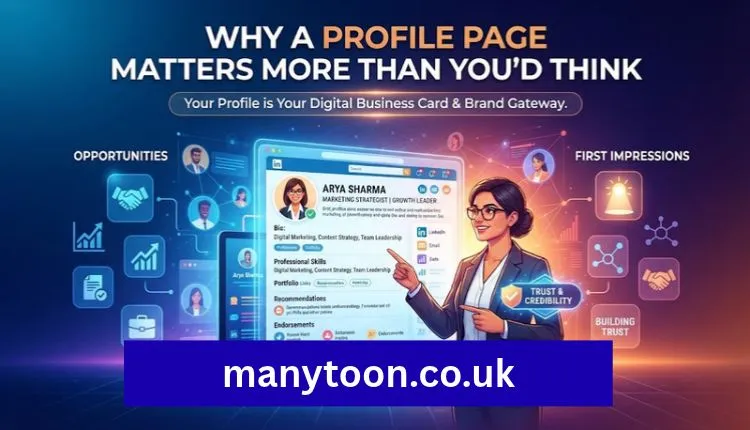
People underestimate profile pages because they seem like a small, static part of a bigger platform. In practice, they do a lot of quiet work.
| Purpose | What It Does |
| First impression | Often the first page a new visitor lands on after clicking your name or handle |
| Trust signal | A complete profile with a real photo and bio reads as more credible than a blank one |
| Discoverability | Usernames, keywords, and bios in profile pages are indexed and searchable on most platforms |
| Conversion | On marketplaces and freelance sites, a strong profile page directly affects whether someone buys or hires |
| Reputation | It’s usually the anchor point people return to when checking your history, reviews, or past work |
A half-finished profile, no photo, a one-line bio, no links, tends to get skipped over even if the person or brand behind it is genuinely good. People read incompleteness as a red flag, fairly or not.
Key Elements of a Strong Profile Page
Not every platform lets you customise all of these, but the strongest profile pages usually cover most of this list.
| Element | Why It Matters |
| Profile photo or avatar | Faces (or clear logos) get more trust and engagement than blank icons |
| Display name / username | Should be consistent across platforms so people can find you elsewhere |
| Bio or description | A few lines that answer “who is this and why should I care” |
| Contact or link options | Website, email, or booking link, wherever the platform allows it |
| Social proof | Reviews, follower counts, testimonials, or verified badges |
| Activity or portfolio | Recent posts, work samples, or history that backs up the bio |
| Category or niche tags | Helps the platform’s search and recommendation system place you correctly |
How to Create a Profile Page That Works
- Start with the photo: Use a clear, well-lit headshot or a recognisable logo. Blurry, badly cropped, or stock-photo-looking images quietly cost you clicks.
- Write a bio that says something specific: Skip vague lines like “passionate about creativity.” Say what you actually do, for whom, and what makes you worth following. Specificity reads as confidence, visit more.
- Keep your username consistent: If you’re @sarahbuilds on Instagram and @sarah.builds99 on TikTok, people lose the thread. Reserve the same handle everywhere you can.
- Add proof, not just claims: Link to work samples, pin a strong post, or list a review count. A profile that shows rather than tells will always outperform one that only tells.
- Update it regularly: A profile page frozen in 2022, old job title, dead links, outdated photo, signals neglect. Treat it as a living page, not a one-time setup task.
- Match the platform’s tone: A LinkedIn profile page and a TikTok profile page shouldn’t read the same way. Formality that works on one can feel stiff or out of place on the other.
If you’re managing this across social platforms, these Instagram marketing tips for small businesses go into more detail on turning a basic profile into one that actively pulls in followers and customers.
Profile Page vs. Bio Page vs. About Page
These three terms get mixed up constantly, so here’s how they actually differ.
| Page Type | Typical Use | Example |
| Profile page | Personal or account-level identity on a platform | Your Instagram or LinkedIn profile |
| Bio page | A short, standalone summary, often used by creators for link-in-bio tools | Linktree-style pages |
| About page | A brand or company-level page explaining the business | A website’s About Us page |
A profile page is usually tied to an account and a platform. A bio page is a lightweight, standalone summary. An About page speaks for an entire organisation rather than one individual. Manytoon’s own About Us page is a decent real-world example of the third type: it introduces the site rather than a single person.
Profile Pages and Online Reputation
A profile page doesn’t exist in isolation. It’s usually the first result someone finds when they search your name or brand, which makes it part of your broader online reputation, whether you’ve thought about it that way or not. If you want to understand how that connects to bigger-picture reputation management, this piece on ORM marketing explains how online image and search visibility tie together.
This matters even more on social platforms, where follower counts and engagement double as trust signals. Growing that presence takes consistency more than luck, and it’s a topic covered well in Manytoon’s social media section if you want to dig deeper into platform-specific strategy.
Common Mistakes People Make With Profile Pages
- Leaving fields blank: An empty bio or missing photo does more damage than a slightly imperfect one.
- Copy-pasting the same bio everywhere: What works on LinkedIn rarely fits TikTok’s tone, and vice versa.
- Ignoring keywords: Many platforms use profile bios in their internal search, so a bio with zero relevant terms is harder to find.
- Forgetting to link out: A profile page with no website, portfolio, or contact link is a dead end for anyone who’s interested.
- Never revisiting it: Job changes, rebrands, and new offerings should show up on your profile page, not just in a post from two years ago.
For general background, see the Wikipedia overview of user profiles.
FAQs
What’s the difference between a profile page and a homepage?
A homepage represents an entire website or business. A profile page represents one account, person, or entity within a larger platform or site .
Does a profile page affect SEO?
Yes, on most platforms. Search engines and internal platform search tools both index profile bios, usernames, and linked content, so a well-written profile page can genuinely help with discoverability.
How long should a profile bio be?
It depends on the platform, but shorter is usually better. Aim for a couple of sentences that are specific rather than a paragraph that says very little.
Should I use the same profile photo everywhere?
Generally yes. A consistent photo across platforms helps people recognise you and builds trust faster than a different image on each account.
Can a profile page help a business, not just an individual?
Absolutely. Business accounts on platforms like Instagram, LinkedIn, and marketplaces rely on profile pages to build credibility, the same way an About Us page does for a website.
Conclusion
A profile page looks like a small piece of the internet, but it usually does more heavy lifting than people expect. It’s often the first, and sometimes only, thing a visitor checks before deciding whether to trust you. A clear photo, a specific bio, consistent branding, and a bit of regular upkeep go a long way toward making that first impression count.
Treat your profile page as part of your identity online, not an afterthought you fill in once and forget.
